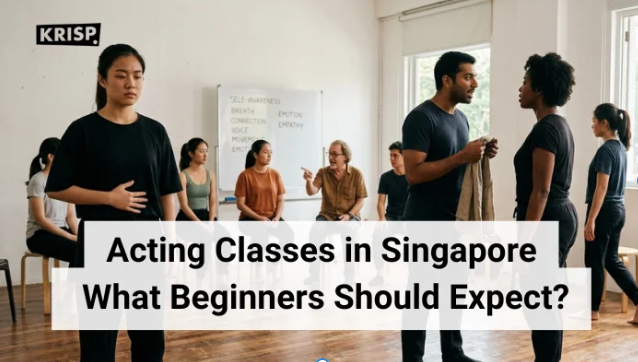
If you’re considering acting classes in Singapore, like those offered by KrisP Production, are a practical place to start. These classes focus on core skills and help you build the confidence to perform in front of others.
In Singapore, aspiring actors have access to a wide range of acting classes and drama courses. You’ll find many options across established institutions and smaller studios, which give you different ways to practise and improve your performance skills.
This article will guide you through what to expect from your first acting classes in Singapore. Plus, we’ll cover the essential techniques and exercises, how to find the right class, and what it takes to progress as an actor.
Fundamentals of Acting: Building a Strong Foundation
Strong acting comes from control over your technique and awareness on stage. You cannot fake presence there because the audience can tell when you are simply reciting lines and when you are fully engaged in the moment.
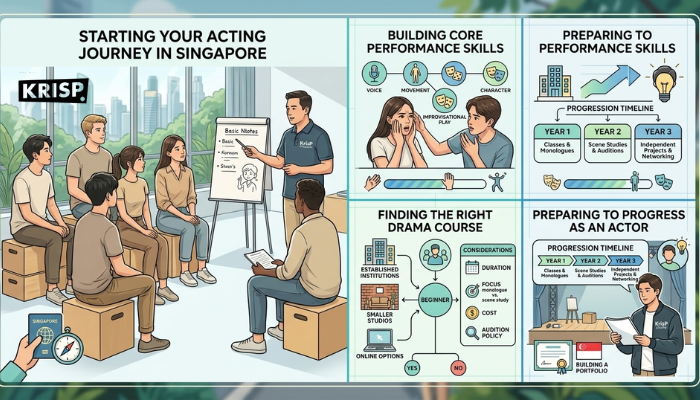
On top of that, you can’t master fundamental techniques by memorizing lines or hitting marks. These techniques focus on understanding your body, reactions, and connection with others. Once you build this base, your performance becomes more consistent and grounded.
Let’s break down the core skills you’ll develop in beginner acting classes:
Developing Self-Awareness and Presence
When students step into drama classes in Singapore, body awareness is one of the first skills teachers help them build. Plus, being physically present isn’t enough here, so you need to stay mentally and emotionally engaged for your stage presence to feel natural.
In this case, simple acting techniques, like breath-focused exercises, improve self-expression and help you stay present during a scene. In one class, we walked across the room and focused on each step. And that simple exercise completely changed how we approached scenes.
As your presence improves, your movements and reactions become more controlled and intentional.
Mastering Voice and Movement Techniques
Your voice shows emotion, tone, and intention, so learning how to control it helps your performance feel clear and believable.
In drama exercises, students practise using the body to support sound, tone, and delivery across the stage. As a result, their voice reaches the audience clearly, and their lines start to carry real emotion.
At the same time, body language influences how a character is understood. When you learn to control your body, your performance skills become more precise, and your actions start to support the story clearly.
Unlocking Emotional Range and Depth
Actors build emotional range by working with memory, imagination, and guided practice. These methods support character development and help you respond believably.
You also learn how to express emotion without forcing it. As you explore different roles, you begin to understand how emotions affect behaviour on stage.
Beyond that, building empathy comes from putting yourself in the character’s position and trying to understand what drives them. As you ask questions like, “What would I do if I were this person?” you start to see the world from their point of view. That’s what helps your acting feel more believable and layered.
Finding the Right Acting Classes in Singapore
Choosing the right acting class in Singapore depends on your goals and how you prefer to learn.
Sometimes, you’ll find theatre companies, drama schools, and independent studios offering different types of courses. Some of them focus on children, while others focus on adults, so it’s important to choose one that matches your skill level and experience.
Here’s what you should consider when comparing acting classes in Singapore:
- Convenient Location and Schedule: If the course is at 107 North Bridge Road and you live in the east, the travel time can become a problem. That’s why you should look for classes near your area or with flexible timings.
- Instructor’s Credentials: We once took a workshop led by an instructor who had worked with multiple acting academies. That firsthand experience gave us practical insights you won’t find in textbooks.
- Small Class Sizes: In larger drama classes, you may receive limited feedback per session as they are crowded with many students. By comparison, smaller groups give instructors more time to focus on your progress and specific challenges.
- Clear Course Fee and GST: Training programmes vary wildly in price. For instance, some charge per term, others per session. Because of this, check what’s included in the application process so you’re not surprised later.
Bottom line: Theatre training in Singapore offers plenty of choices. But the right fit depends on what you want to learn and how you experience the arts.
See also: DigitalS Life and Technology
What to Expect from Your First Acting Course
Your first acting class will feel fun and challenging as you explore the craft for the first time.
Eventually, you’re going to feel nervous. You might even feel like running out the door during the first five minutes. But stick with it because the best actors we know all felt the same way on day one.
In most cases, acting classes in Singapore follow a similar structure:
Typical Class Structure and Activities
Classes usually begin with warm-ups and icebreakers to build trust within the group. Following these, you might do exercises that feel unusual at first, like mimicking movements or playing simple character games.
After that, the class usually moves into improvisation activities, where you are asked to create scenes on the spot with no preparation. This pushes you to react quickly and stay present.
Monologue and scene work come next. You perform short pieces, then receive feedback on your delivery, timing, and emotional connection. In many classes, you repeat the scene with those notes, which helps you see what changes actually work.
Overcoming Nerves and Stage Fright in Acting
Trying to get rid of nerves usually makes them feel worse since your body often reacts to fear and excitement in very similar ways. Instead, you should treat that feeling as energy you’ll use in a performance.
For example, if you know your lines, understand the scene, and have practised enough, you have something solid to fall back on. Because of this prep work, you start paying attention to the scene, your scene partner, and what needs to happen next, rather than thinking about how nervous you feel.
Over time, this process builds trust in your training. As a result, your communication skills improve, your stage presence becomes steadier, and being on stage feels less overwhelming each time.
Progressing from Beginner to Intermediate Acting
Once your confidence and skills improve, intermediate acting classes challenge you to go further. At this stage, you understand the basics of acting, have worked on scenes, and can manage stage nerves without freezing.
This breakdown shows how the two levels compare in drama classes across Singapore:
| Beginner Level | Intermediate Level |
| Focus on fundamentals and overcoming fears | Deeper character development and an expanding range |
| Learning to project your voice and move on stage | Tackling complex scripts outside your comfort zone |
| Building confidence in a safe space to fail | Taking creative risks in musical theatre and drama |
| Understanding basic acting techniques | Mastering memory recall, sense memory, and substitution |
| Reading scripts at the surface level | Analyzing subtext and what characters don’t say |
Honestly, don’t rush the progression, because each stage builds on the last. For instance, intermediate training programmes push you harder through more complex roles, and your understanding deepens through that process. Over time, those skills stay with you in performing arts and in other parts of your life.
Your Path Forward in Acting and Creativity
Acting classes in Singapore build stage presence and performance skills while also improving how you communicate and express yourself. These skills carry into everyday situations, helping you connect with others more clearly. You might explore drama, musical theatre, or focus on building confidence, and each path helps you see your abilities from a different angle.
Actors who improve quickly tend to show up consistently and stay engaged with the process. Theatre training pushes you into unfamiliar situations, and that pressure helps you grow more comfortable in performance settings.
Ready to start your acting journey? KrisP Production offers beginner-friendly courses designed to help you discover your potential on stage. Contact us today and take that first step onto the stage.